

Designing for Growth
Using urban tree canopy and land cover assessments to promote community resilience
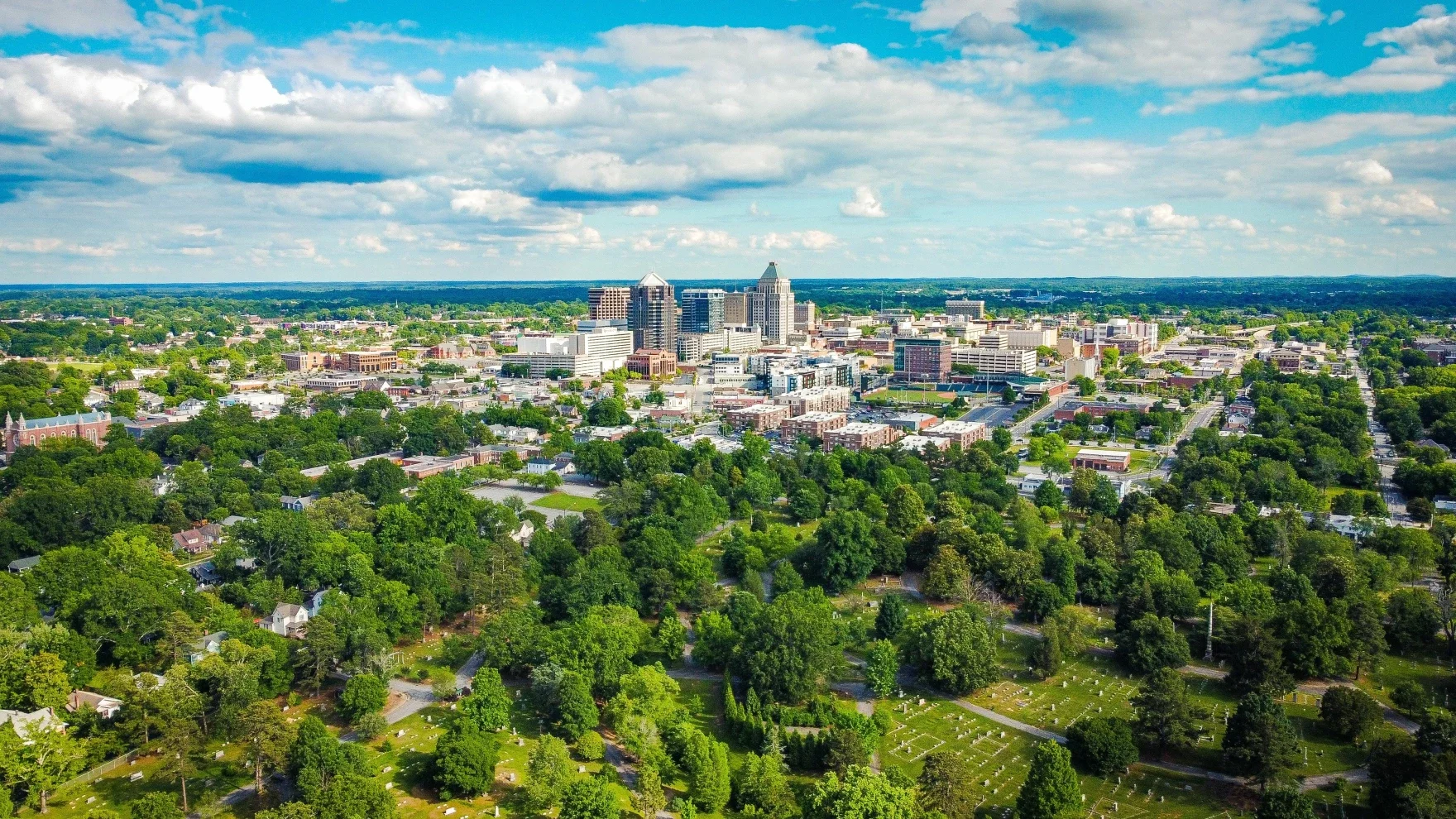
How Planning Communities helped the City of Greensboro move towards a greener future by mapping out tree planting and conservation efforts.

KEY DELIVERABLES

OVERVIEW
Greensboro, North Carolina set out to strengthen its long-term climate resilience by taking a deeper look at one of its most valuable natural assets: its urban tree canopy.
With support from the Arbor Day Foundation and the U.S. Forest Service, the City initiated a comprehensive canopy assessment to guide future investment in environmental health, equity, and community wellbeing. The goal was not simply to plant more trees, but to understand where canopy coverage could most effectively reduce heat, manage stormwater, support vulnerable neighborhoods, and contribute to long-term civic infrastructure.
Planning Communities partnered with Greensboro to translate this data into a practical, equity-centered reforestation strategy the City could sustainably implement over time. By aligning canopy analysis with community priorities and climate projections, Greensboro positioned its urban forest as proactive natural infrastructure designed to support growth, resilience, and quality of life in a changing climate.

CHALLENGE
To develop a concrete reforestation plan, Greensboro faced several interconnected challenges:
Data Gap: Greensboro lacked an updated, citywide understanding of tree canopy, land cover, and environmental conditions, with its last assessment conducted more than a decade earlier.
Climate Exposure: Rising heat, flooding, and extreme weather risks were increasingly overlapping with areas of low tree canopy and high social vulnerability.
Equity Planning: The City needed to ensure that urban reforestation efforts prioritized neighborhoods facing the greatest climate, health, and socioeconomic challenges.
Long-Term Stewardship: Sustaining canopy improvements required community education, local leadership engagement + incentives, and shared responsibility beyond a one-time planting effort.
Greensboro needed a partner to design a data-informed, equity-centered reforestation strategy that could support climate resilience and build lasting community buy-in as the city continued to grow.
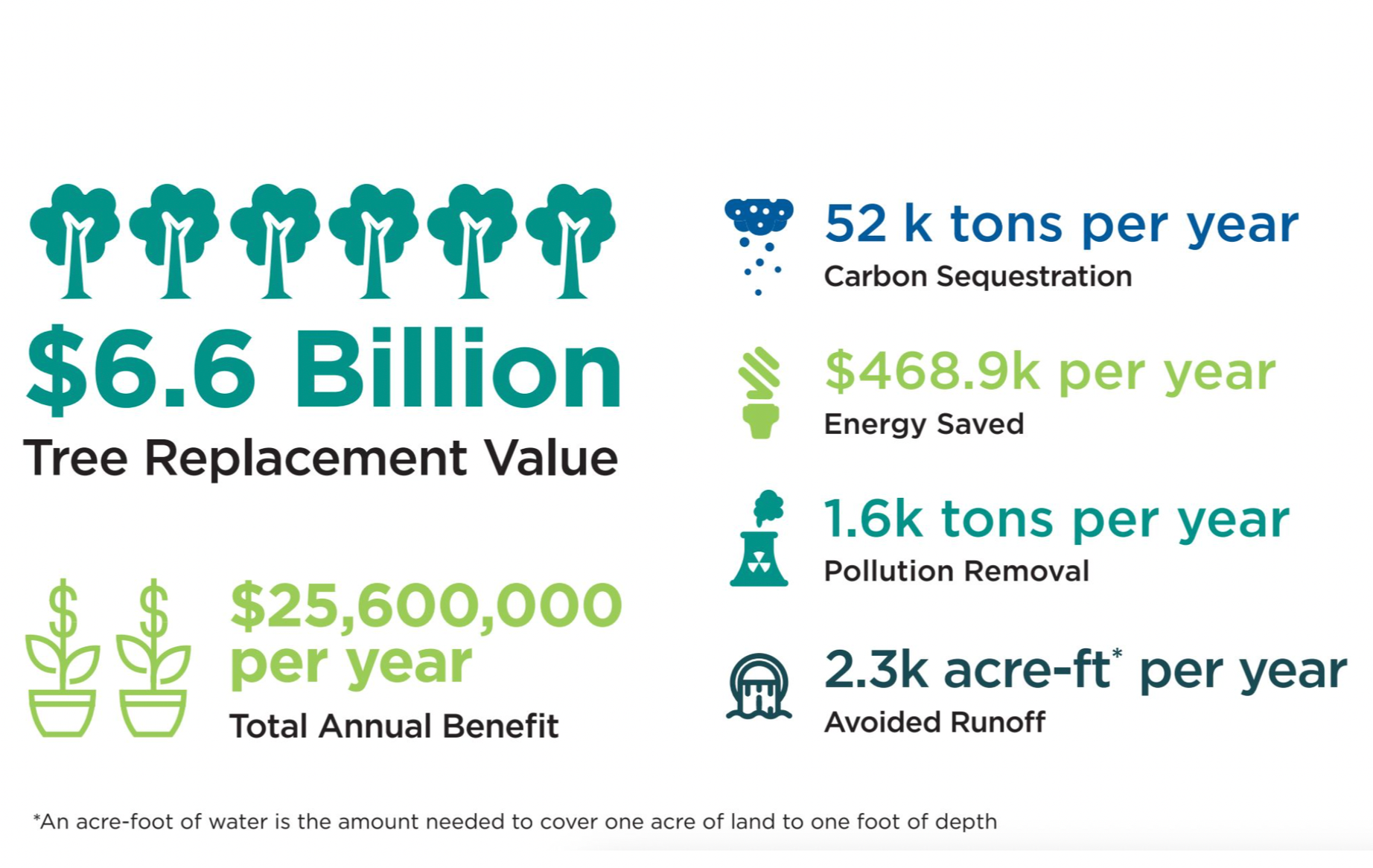
Benefits of Tree Canopies
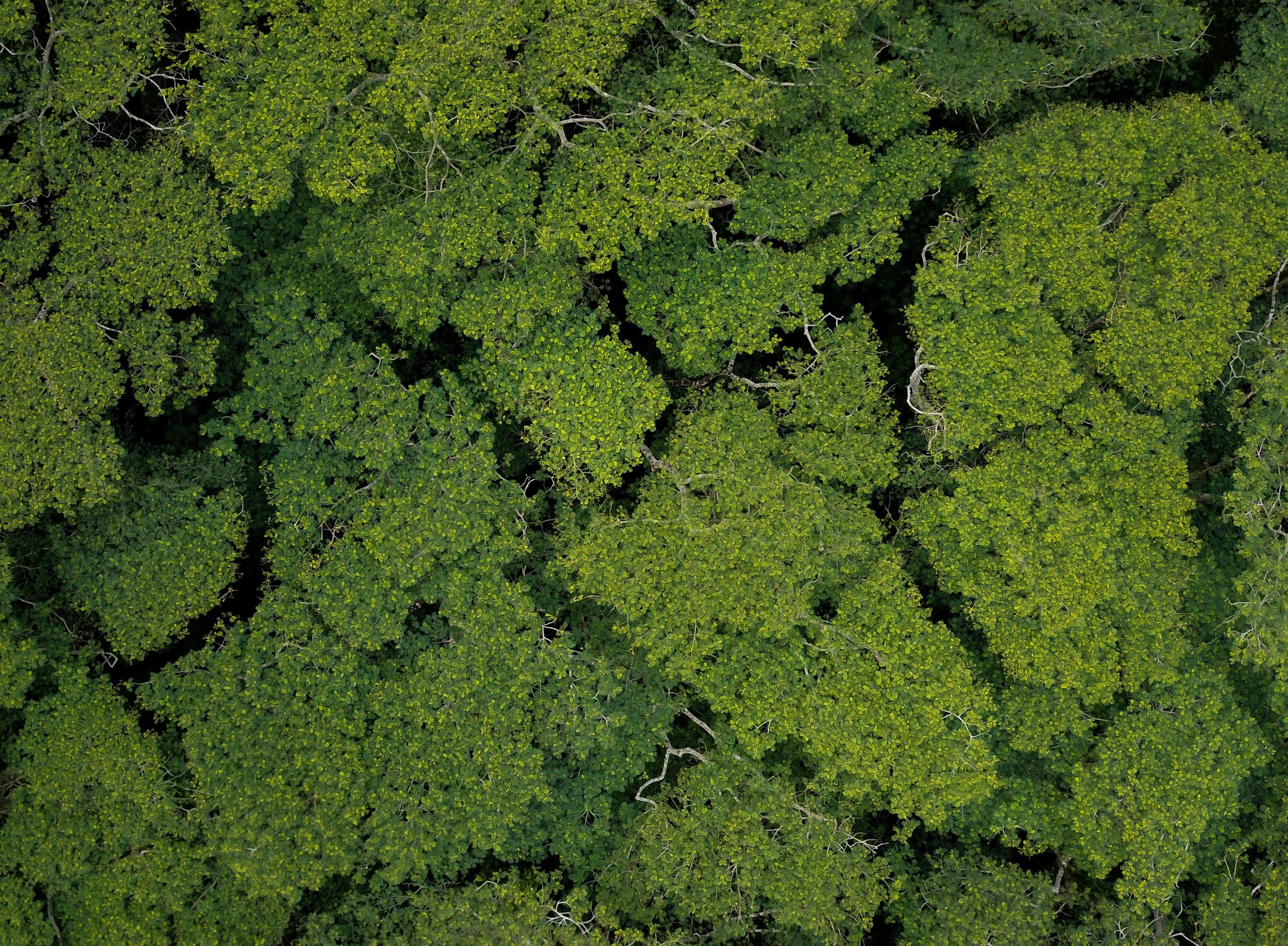
Think of a tree canopy as nature’s umbrella. Its widespread layer of leaves and branches offer shade and protection where we need it most.
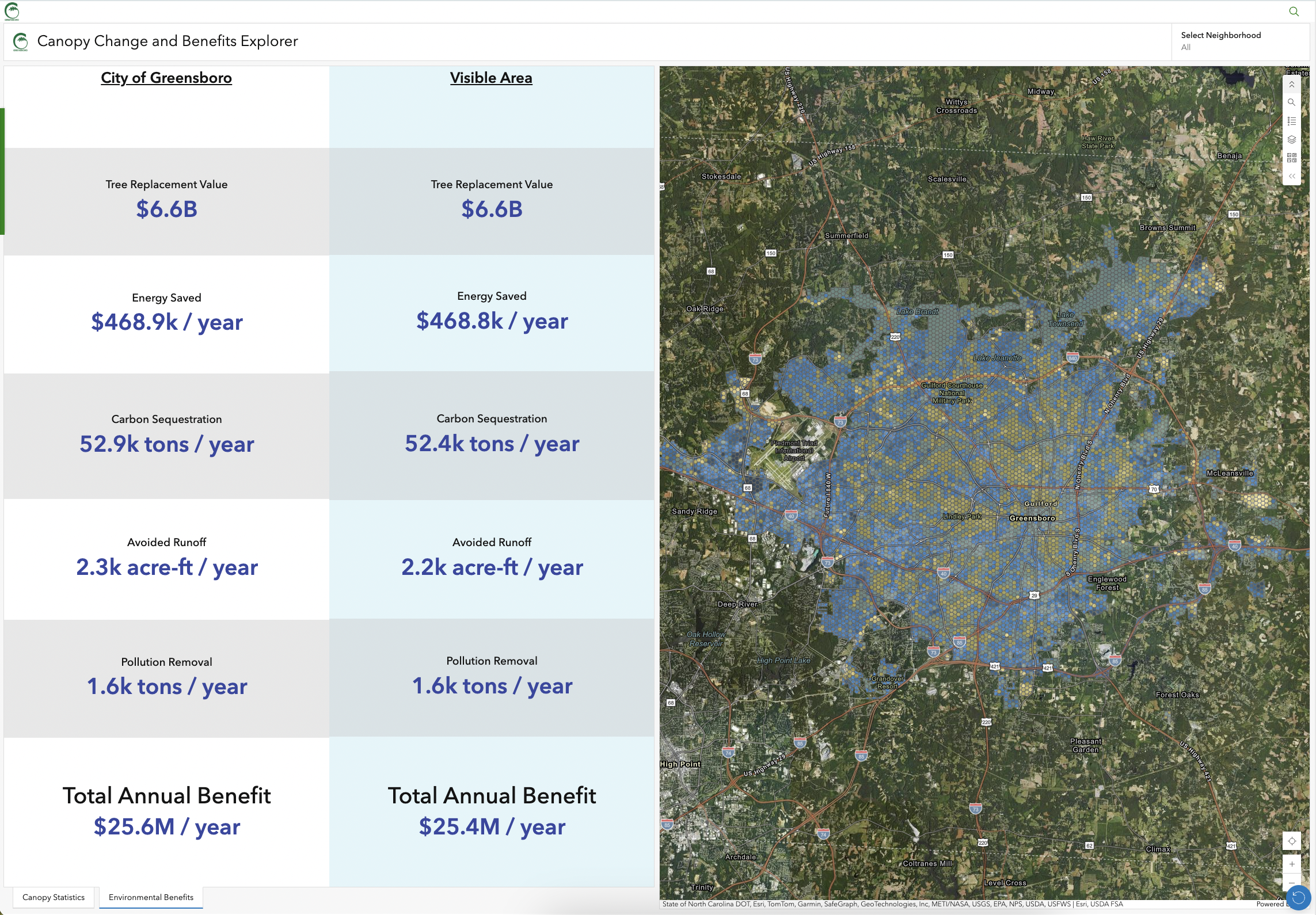
Urban trees quietly do a lot of heavy lifting. They clean the air, manage stormwater, reduce erosion, and cool city streets, making cities more livable and more resilient to climate change.
A tree canopy assessment helps cities understand the real value of their trees, so they can make smarter decisions about where to protect, plant, and invest.
Assessing Tree Canopy & City-Wide Vulnerability
Creating a thorough, equitable urban reforestation plan requires an understanding of the current tree canopy as well as city-wide strategy of where new trees are most needed, and by whom.
To achieve this, we mapped climate risks – such as flood and heat exposure – against city infrastructure (also known as built assets) and neighborhoods with the highest social, physical, and economic vulnerabilities.
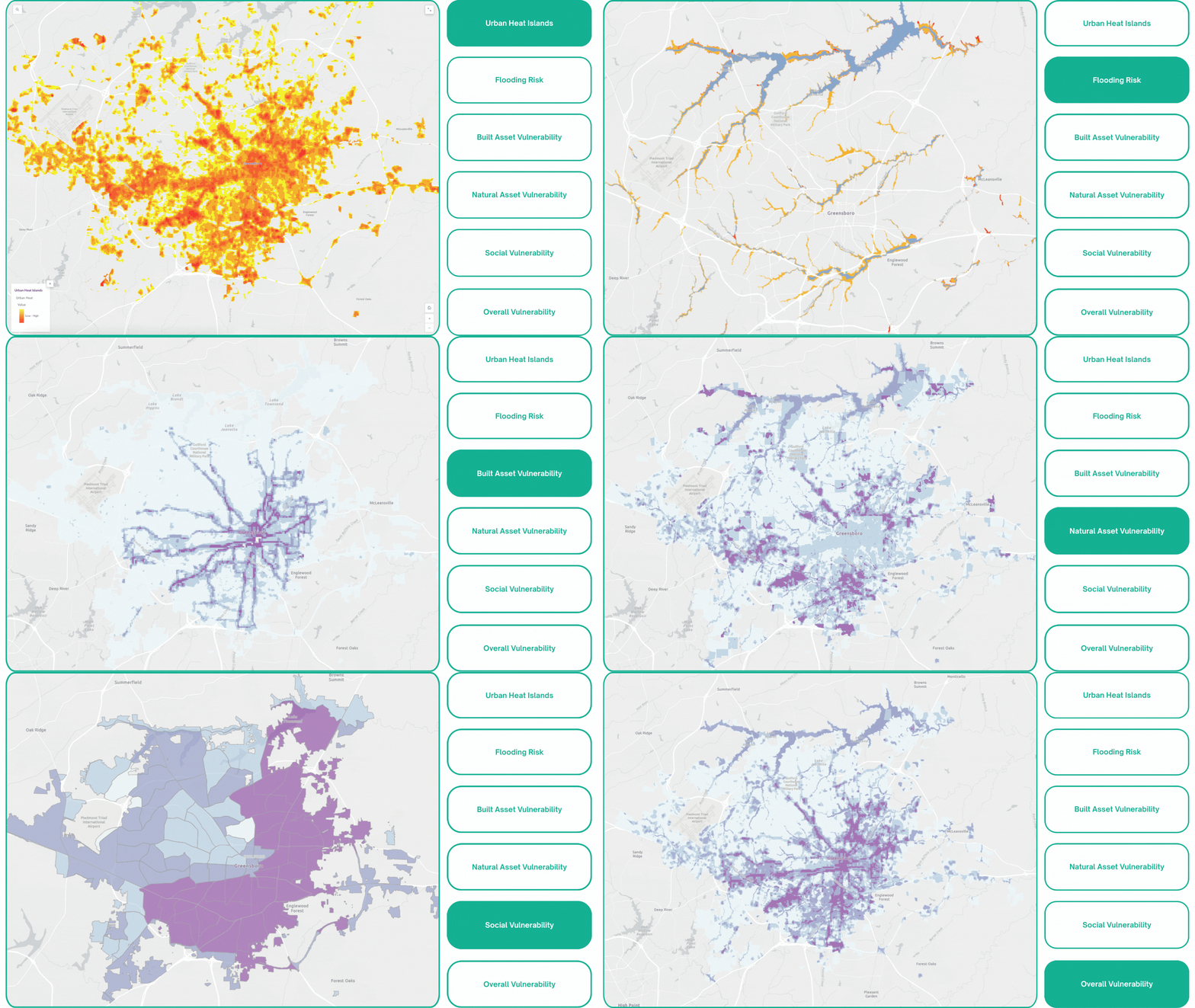
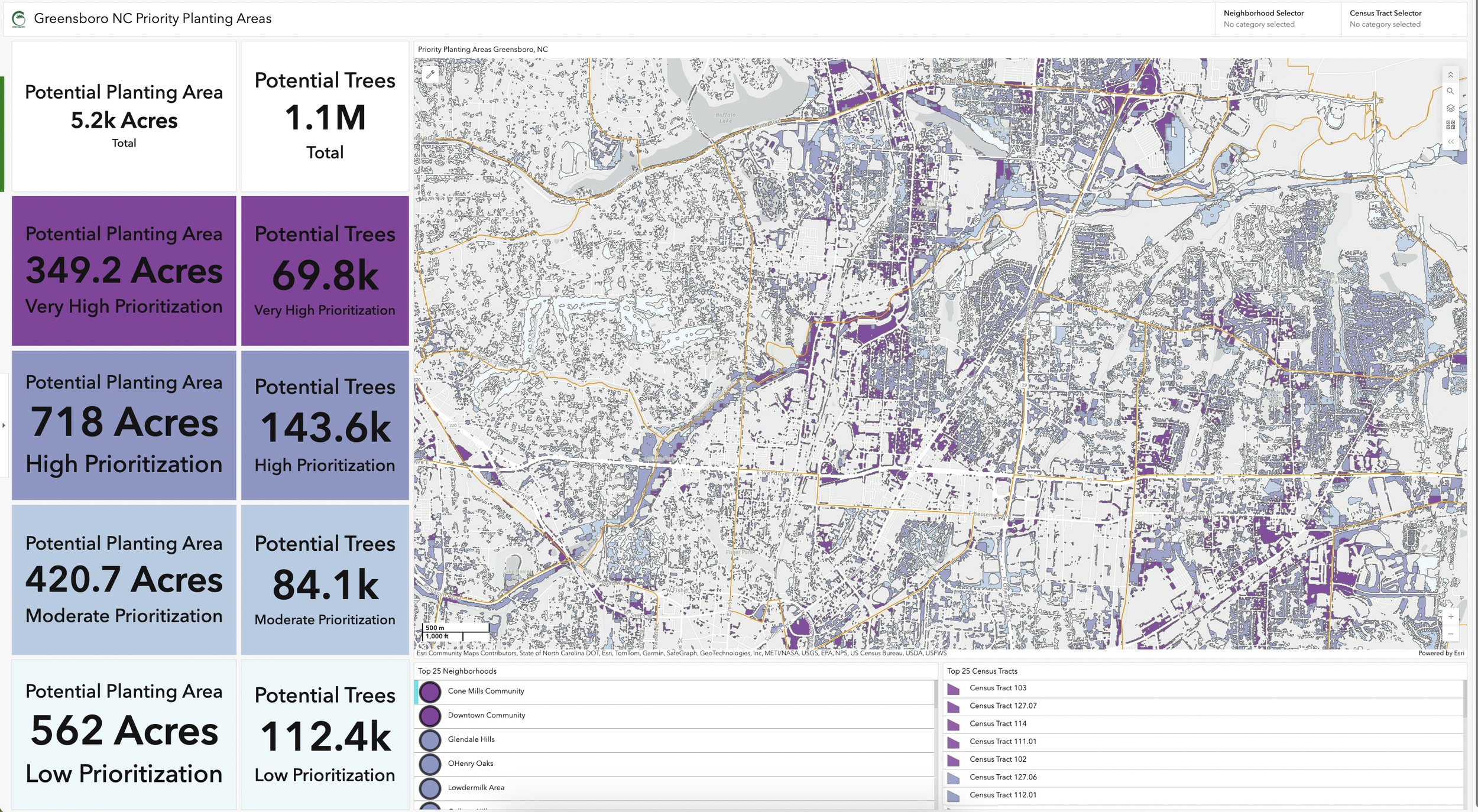
The analysis identified the 25 neighborhoods with the greatest need for new trees, allowing us to complete the city-wide canopy assessment and guide the City’s next steps.
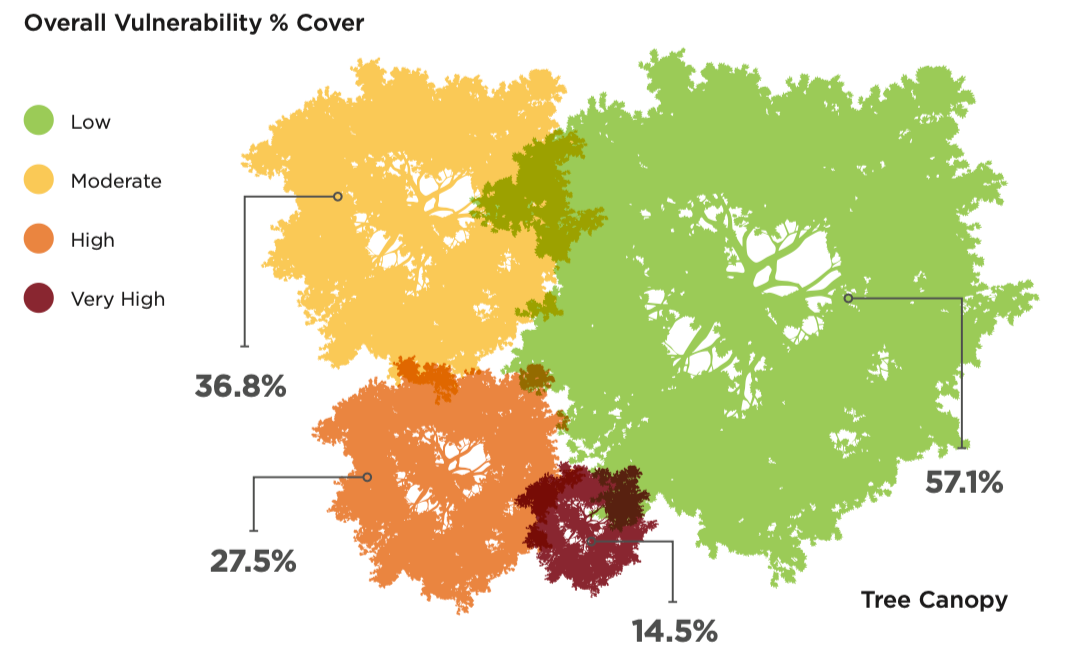
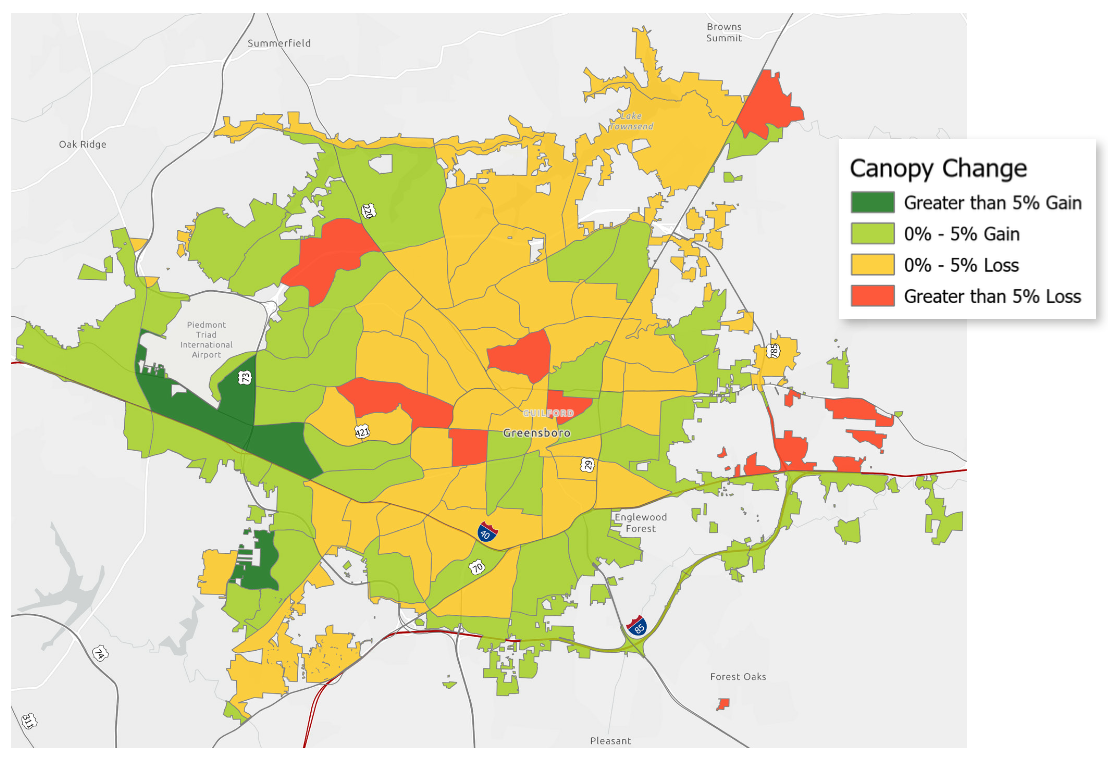
This integrated approach revealed not just where trees were missing, but also where their loss had the greatest impact. With more than 33,720 trees gone since 2012, over 40% of Greensboro’s canopy vulnerability was at a High or Very High level.
By isolating these metrics by neighborhood, we could offer a clear roadmap for Greensboro to prioritize reforestation efforts.
Designing a Living System:
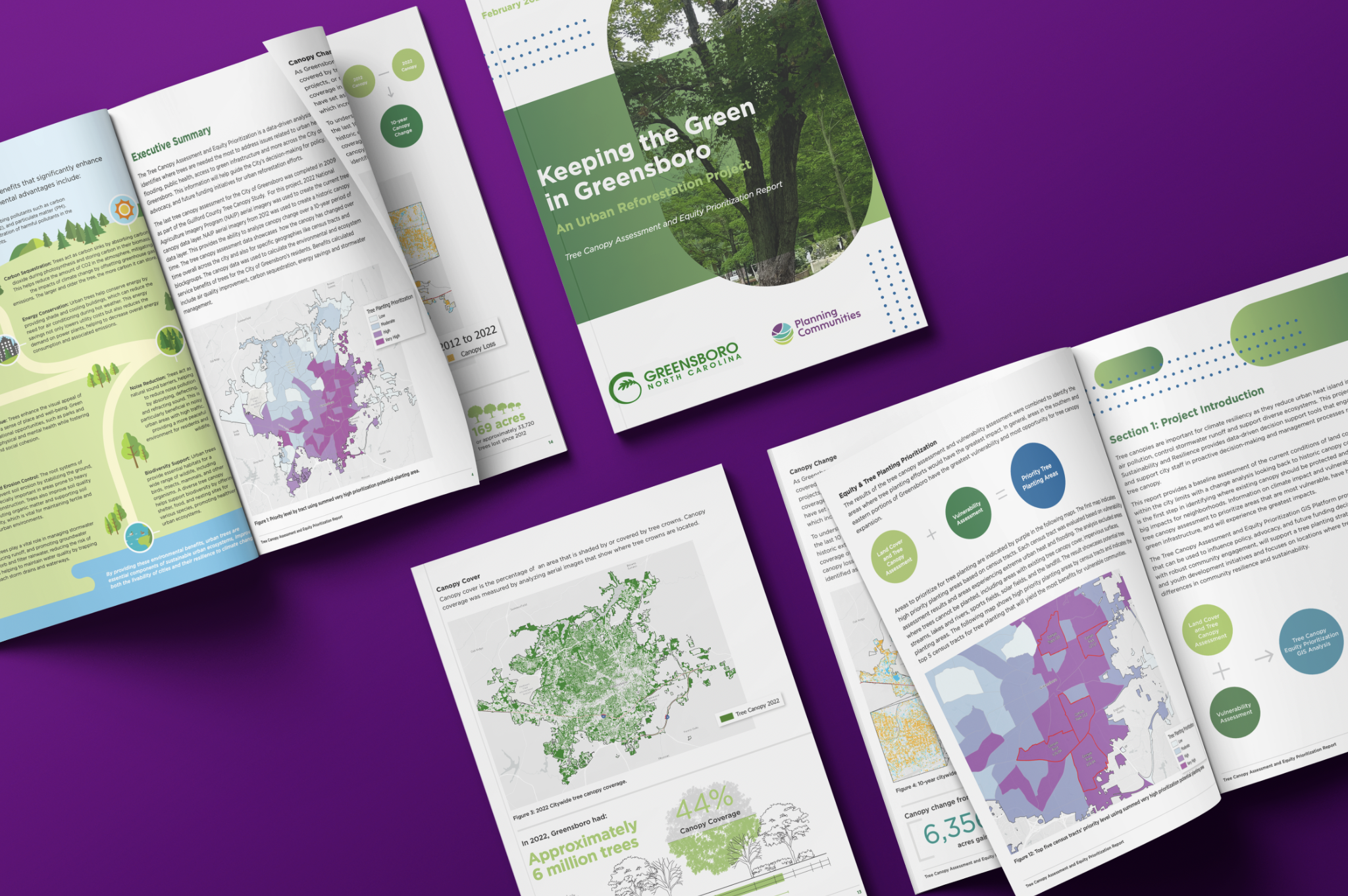
The Tree Canopy Improvement Program
Urban reforestation is a long-term effort that depends on coordination, care, and public support. After completing Greensboro’s tree canopy assessment, it was clear that data alone wouldn’t drive action. The City needed a way to turn analysis into shared understanding and practical next steps.
All of this work came together as the Tree Canopy Improvement Program.
1.Organizing Data for Ongoing Use
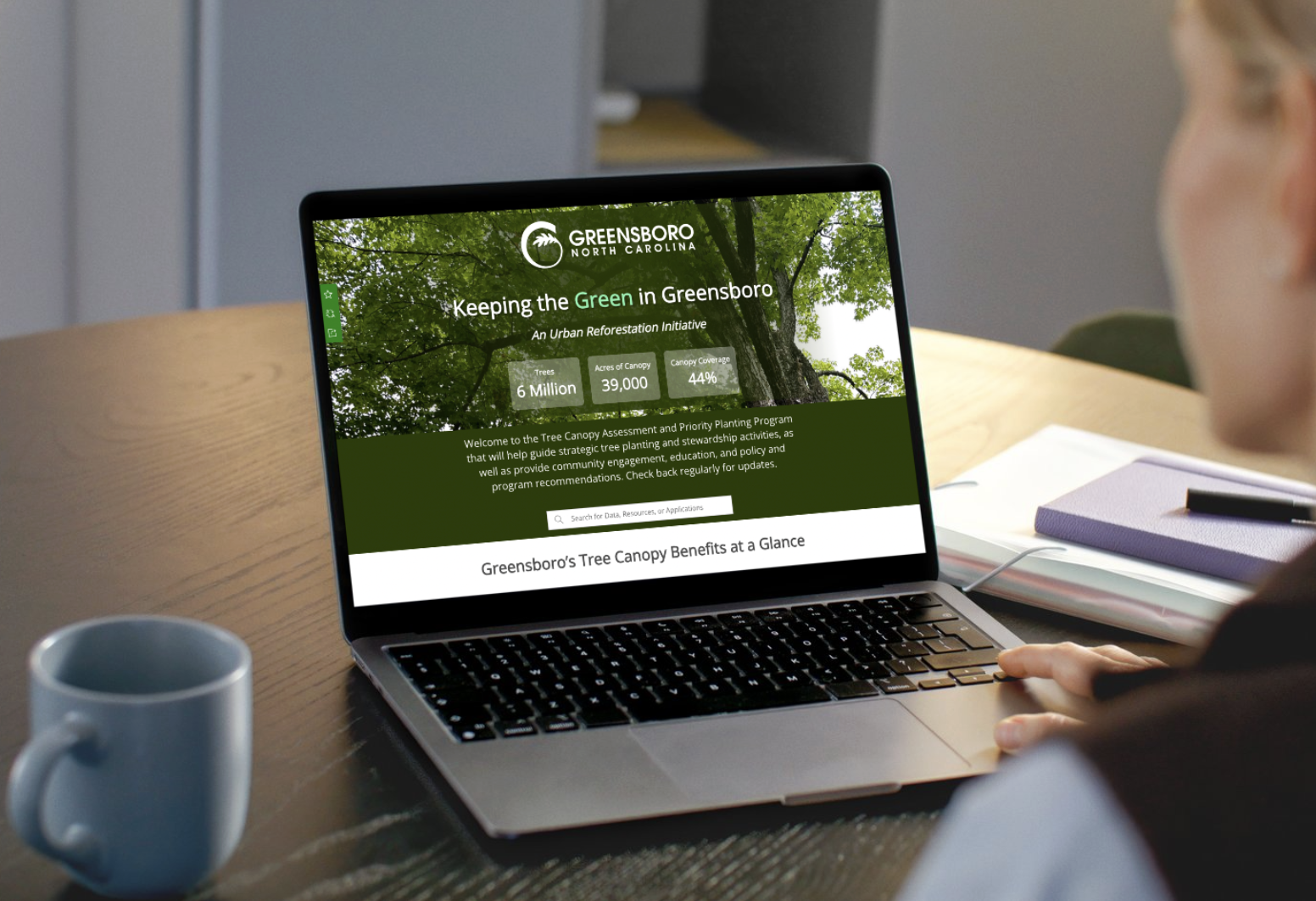
The Tree Canopy Improvement Program was organized around a public-facing website that brings educational tools, assessment data, and neighborhood-level priorities together in one place. This makes it easy for community members to understand why trees matter, where investment is needed most, and how to get involved. Rather than a static report, the website functions as a living playbook that the City and its partners can return to as conditions, priorities, and funding evolve.
2. Turning Community Assets into Future Action
Alongside the technical analysis, we mapped out an implementation pathway for community activation. This included identifying how local organizations could lead educational programming, coordinate neighborhood-based tree planting efforts, and serve as trusted messengers to translate canopy data into sustained civic action by hosting plantings and other educational events.
Rather than a one-time campaign, the model was designed as a scalable, community-led framework that can be formally launched when additional funding resources are secured. Although the community activation phase was paused due to funding constraints, the technical analysis and prioritization framework now serve as durable infrastructure for future investment.
By grounding future planting efforts in integrated data and a mapped community leadership structure, Greensboro now has a strategic foundation to guide long-term canopy growth in a way that strengthens climate resilience and neighborhood wellbeing over time.
“The hub is an amazing visualization of multiple data points and information uniting on one platform – solidifying a need for continuous growth in Greensboro, one tree at a time!”
Shree Dorestant
Chief Sustainability Officer
City of Greensboro NC
“Creating a place for the citizens to interact with their data in a useful way was a high priority for this project. Every Hub element and dashboard was designed to get the residents to understand how the canopy impacts their house, their neighborhood, and the city as a whole.”
John Hendricks
GIS Analyst
City of Greensboro NC
Conclusion: A living framework for long-term resilience
The Tree Canopy Improvement Program created a decision-ready system that Greensboro can continue to use over time. By linking canopy coverage to climate risk, public health, social vulnerability, and built assets, the City now has a clear rubric for prioritization. And just as importantly, the program turned data into shared understanding and local ownership, all while offering a replicable model for peer cities seeking long-term, community-supported climate resilience.
Interested in a tree canopy assessment for your community?
Contact us here.
Tags
Tree Canopy | Urban Reforestation | At-Risk Communities | Scenario Modeling | Climate Equity | Heat Risk | Flooding | Climate Strategy | Community Engagement | Vulnerability Assessment

We are here to guide you through a full spectrum of climate and sustainability planning for your needs.